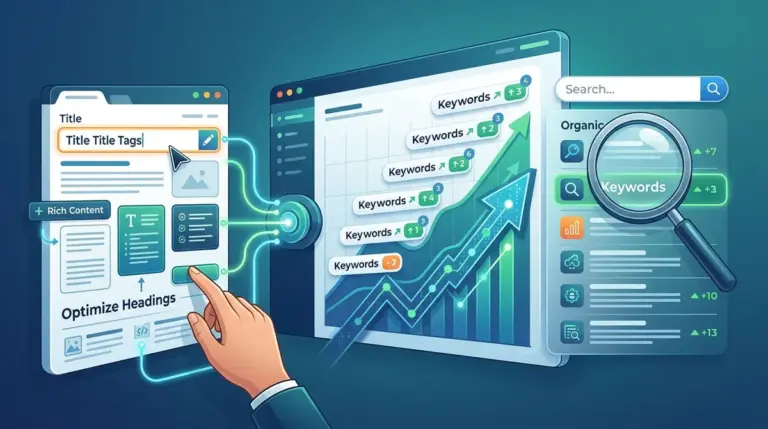
Internal linking is often the most undervalued lever in an SEO’s toolkit because it is entirely within your control. Unlike external backlink acquisition, which requires outreach and third-party approval, internal links allow you to redistribute existing authority across your domain instantly. For pages stalled on the second page of search results, a strategic injection of internal link equity can be the specific catalyst that pushes them into the top three positions.
The Mechanics of Link Equity Redistribution
Search engines use internal links to discover new content and, more importantly, to understand the relative importance of pages within a site’s hierarchy. When a page receives a high volume of internal links, Google interprets this as a signal of high value. This is the concept of PageRank—while the public toolbar is gone, the underlying math still dictates how authority flows from your "power pages" (those with the most external backlinks) to your "target pages" (those you want to rank higher).
To move the needle on specific keyword rankings, you must identify your high-authority URLs. These are typically your homepage, cornerstone guides, or legacy blog posts that have naturally earned external links over time. By placing a link on these high-authority pages pointing toward a lower-ranking target page, you are effectively "shuttling" equity to the content that needs a boost. This process shortens the time it takes for Google to re-evaluate the target page’s relevance and authority.
Strategic Anchor Text Optimization
Anchor text serves as a direct communication to search crawlers about the subject matter of the destination page. While external link anchor text must be carefully managed to avoid over-optimization penalties, internal link anchor text allows for more aggressive, keyword-rich descriptions.
Best for: Improving rankings for specific long-tail and competitive head terms simultaneously.
If you are trying to rank a page for "enterprise CRM software," using that exact phrase as anchor text from a relevant blog post about "sales automation" provides a clear semantic signal. Avoid generic phrases like "click here" or "read more," which provide zero context to crawlers. Instead, use descriptive variations of your target keywords to build a topical map that search engines can easily navigate. However, maintain a natural flow; the link must make sense for the user, or you risk increasing bounce rates, which can negatively impact your rankings over time.
Reducing Click Depth for Faster Indexing and Crawling
Click depth refers to the number of clicks it takes to reach a specific page from the homepage. Pages buried deep within a site’s architecture—usually more than four clicks away—suffer from two major issues: they receive very little link equity and are crawled less frequently. Search engine bots have a limited "crawl budget" for every site; if your high-value pages are hidden, they may not be indexed or updated in the SERPs as often as necessary.
By flattening your site architecture through internal linking, you ensure that bots can reach your most important content in two or three clicks. This is particularly vital for e-commerce sites with deep category structures or publishers with massive archives. A "Related Posts" section or a "Featured Products" sidebar on high-traffic pages can immediately reduce click depth and signal to Google that these pages deserve priority.
Pro Tip: Avoid using the "nofollow" attribute on internal links unless you are specifically trying to prevent bots from crawling utility pages like login screens or shopping carts. Using nofollow on internal content links effectively "kills" the flow of PageRank, wasting the authority your site has worked hard to build.
The Hub-and-Spoke Model for Topical Authority
Topical authority is a significant ranking factor. Google prefers to rank sites that demonstrate deep expertise in a specific niche. Internal linking is the primary way to demonstrate this expertise through the "Hub-and-Spoke" or "Topic Cluster" model. In this framework, you create a central "Hub" page—a comprehensive guide on a broad topic—and multiple "Spoke" pages that cover specific sub-topics in detail.
- The Hub Page: Targets broad, high-volume head terms.
- The Spoke Pages: Target specific, long-tail keywords with lower competition.
- The Linking Logic: Every spoke page must link back to the hub, and the hub should link out to every spoke.
This structure creates a closed loop of relevancy. When one spoke page earns a backlink or gains traction, the equity is shared with the hub and, by extension, all other spokes. This collective strengthening of the cluster makes it much harder for competitors to displace your rankings for any single keyword within that topic.
Auditing and Fixing Internal Link Leaks
Before adding new links, you must ensure your existing structure isn't leaking authority. Broken internal links (404 errors) and unnecessary redirect chains (301/302) are friction points for both users and crawlers. When a crawler hits a 404, the equity stops dead. When it hits a redirect chain, a small portion of the link equity is lost at every jump.
Use a site crawler to identify any links pointing to dead pages or through multiple redirects. Correcting these to point directly to the final, live URL ensures that 100% of the possible equity is reaching your target pages. Furthermore, check for "orphan pages"—content that has zero internal links pointing to it. These pages are virtually invisible to search engines and will never rank, regardless of how high-quality the content is.
Building a Sustainable Internal Link Workflow
To maintain and improve keyword rankings, internal linking should not be a one-time audit but a recurring part of your content production. Every time you publish a new piece of content, identify 3-5 existing pages where a link to the new post would be contextually relevant. Conversely, go back to the new post and add links to older, high-performing content that needs to maintain its ranking stability.
Focus on the "Middle-of-the-Pack" pages. These are URLs currently ranking in positions 11 through 20. These pages are already deemed relevant by Google but lack the final "push" to reach the first page. A targeted internal linking campaign—sourcing links from your top 5 most authoritative pages—is often enough to move these keywords into the top 10 within a few weeks, providing a measurable increase in organic traffic without the need for new content creation.
Frequently Asked Questions
How many internal links are too many?
There is no hard limit, but user experience should be the guide. If a page is cluttered with dozens of links that distract from the primary content, it may trigger spam signals or increase bounce rates. Generally, focus on 3-10 high-quality, contextual links for a standard blog post.
Does the position of the link on the page matter?
Yes. Links located within the main body content (contextual links) carry more weight than links in the footer or sidebar. Search engines prioritize links that are likely to be clicked by users interested in the topic.
Should I link to the same page multiple times from one article?
Google typically only counts the anchor text of the first link it encounters on a page when evaluating the destination URL. Adding multiple links to the same destination from a single page provides no additional SEO benefit and may clutter the interface.
Can internal linking help recover from a ranking drop?
If the drop was caused by a loss of topical relevance or a crawl depth issue, yes. Strengthening the internal links to the affected page can reaffirm its importance and help it regain its previous positions, provided the content itself remains high-quality and up-to-date.