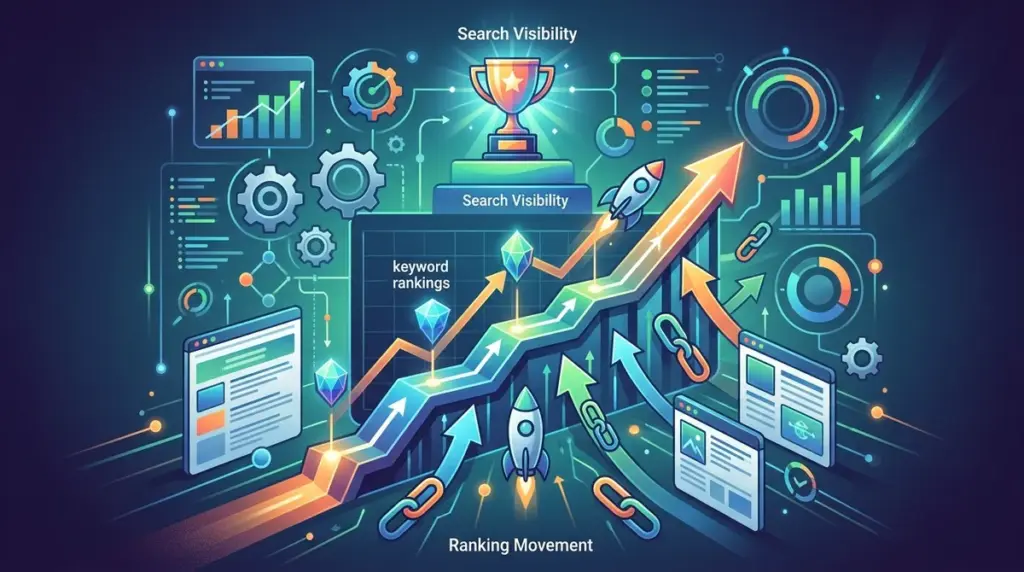
SEO professionals often treat content as the engine and backlinks as the fuel. While high-quality content earns a seat at the table, backlink profiles determine who sits at the head. In competitive niches, the movement of a keyword from the second page to the top three positions is rarely a result of minor on-page tweaks; it is almost always driven by the acquisition of high-authority, topically relevant referring domains. Understanding the mechanics of this movement allows agencies and site owners to allocate budgets toward links that actually move the needle rather than chasing vanity metrics.
The Relationship Between Domain Authority and Ranking Thresholds
Google’s algorithm uses backlinks as a proxy for trust and authority. When a high-authority site links to your page, it passes "link equity," which effectively raises the ceiling of where your content can rank. For low-competition keywords, a well-optimized page might reach the first page on its own. However, for high-volume commercial terms, there is often an "authority threshold." If your competitors have an average of 200 referring domains and you have 20, your keyword ranking will likely plateau regardless of content quality.
Best for: Identifying why specific pages are "stuck" at positions 11–15 despite perfect on-page SEO scores.
Anchor Text Diversity and Semantic Signals
Backlinks do more than just pass power; they provide context. The anchor text—the clickable words in a hyperlink—tells search engines what the destination page is about. If multiple reputable sites link to a page using the phrase "enterprise CRM software," Google gains confidence that the page is a definitive resource for that specific term. This direct signal is one of the fastest ways to trigger upward ranking movement.
The Risk of Exact-Match Over-Optimization
While exact-match anchor text is a powerful ranking signal, over-reliance on it triggers Penguin-style filters. A natural backlink profile consists of a mix of branded anchors, naked URLs, and generic phrases like "click here" or "this study." If 80% of your backlinks use your target keyword as the anchor, your rankings will likely experience high volatility or a sudden drop. Professional SEOs aim for a "diluted" profile where exact-match anchors represent less than 5-10% of the total link cloud.
Link Velocity and Ranking Volatility
Link velocity refers to the speed at which a website acquires new backlinks. A sudden spike in link velocity can signal a trending topic or a viral piece of content, often resulting in a temporary ranking boost. Conversely, a steady, sustained growth in referring domains signals long-term authority. If your link acquisition stops abruptly, you may see "link decay," where your keyword positions slowly erode as competitors continue to build their profiles.
Warning: Rapidly acquiring hundreds of low-quality links from automated "link farms" or PBNs often results in a temporary ranking spike followed by a permanent manual action or algorithmic suppression. Prioritize the quality of the referring domain over the sheer volume of links.
Topical Relevance vs. Raw Domain Rating
A common mistake in link building is prioritizing a high Domain Rating (DR) or Domain Authority (DA) over topical relevance. A link from a DR 40 website that is strictly within your niche (e.g., a pet tech blog linking to a dog food brand) is often more valuable for ranking movement than a DR 80 link from a generic news site. Google’s "Reasonable Surfer" model and patent filings suggest that links are weighted based on the likelihood of a user actually clicking them, which is significantly higher when the source and destination share a common theme.
- Niche Relevancy: Increases the "weight" of the link in the eyes of the Knowledge Graph.
- Traffic Levels: Links from pages that already rank and receive organic traffic pass more value.
- Placement: Editorial links within the body text move rankings more effectively than footer or sidebar links.
Internal Link Distribution as a Force Multiplier
Backlinks don't just help the specific page they point to; they boost the entire domain. By using strategic internal linking, you can funnel the "juice" from a high-authority backlink on your homepage or a viral blog post to your "money pages" (product or service pages). If you notice a keyword is hovering at the bottom of page one, adding three to five internal links from your highest-authority pages can often provide the final push needed to reach the top three positions.
Quantifying the Impact of New Backlinks
To measure how backlinks influence your ranking movement, you must monitor the "time-to-impact." On average, it takes 3 to 10 weeks for a new high-quality backlink to be crawled, indexed, and factored into the SERP position. During this window, you will often see "rank dancing," where the keyword moves up and down several spots before settling into a new, higher baseline. Tracking these movements alongside your link-building calendar is essential for calculating the ROI of your SEO spend.
Strategic Execution for Ranking Growth
To move your rankings effectively, stop viewing backlinks as a numbers game and start viewing them as a competitive gap analysis. Identify the top three competitors for your target keyword and analyze their backlink profiles. Are they winning because of the quantity of links, or because they have links from specific high-tier publications that you lack? Focus your efforts on closing that specific gap. Audit your existing profile to ensure you aren't losing "link juice" to 404 errors, and use 301 redirects to reclaim authority from broken pages. Finally, maintain a consistent link velocity to signal to Google that your site remains a relevant, growing authority in your space.
Frequently Asked Questions
How many backlinks do I need to rank on the first page?
There is no fixed number. It depends entirely on the "link debt" of your competitors. If the top-ranking sites have 50 high-quality referring domains, you will likely need a similar number of high-authority links combined with superior content to compete.
Do NoFollow links help with keyword rankings?
While NoFollow links do not pass direct link equity, they contribute to a natural link profile and can drive referral traffic. Google has also stated that NoFollow is now a "hint," meaning they may occasionally use these links for ranking purposes if they come from highly reputable sources.
Why did my rankings drop after I built new backlinks?
This is often due to "SERP volatility" or a temporary re-evaluation of your site. However, if the drop is permanent, it may be because the new links were flagged as low-quality, or your anchor text profile became too aggressive (over-optimized), triggering a filter.