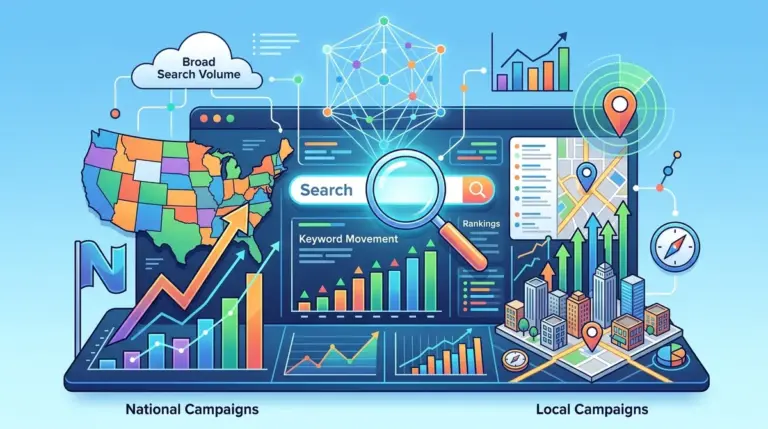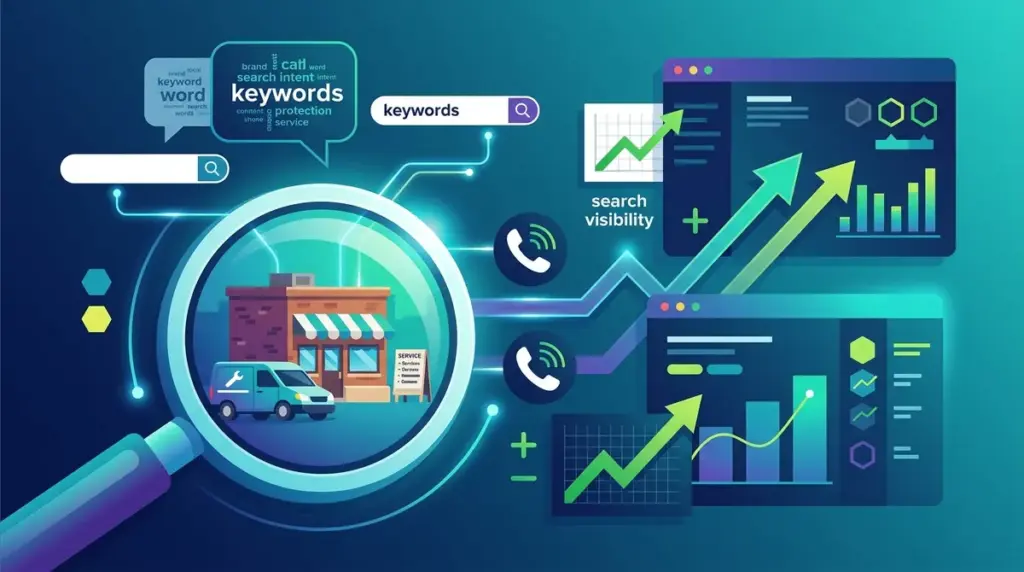
Local service businesses operate in a high-stakes environment where a single position shift in search results can mean the difference between a fully booked week and a silent phone. Unlike national e-commerce brands that chase broad volume, local service providers—plumbers, HVAC technicians, personal injury lawyers, and roofers—must prioritize proximity and intent. Tracking "plumber" at a national level provides zero actionable data for a business located in Austin, Texas. To drive actual leads, rank tracking must be hyper-localized, segmented by service urgency, and divided between the Map Pack and traditional organic results.
Segmenting Keywords by Conversion Intent and Urgency
Not all keywords carry the same weight for a service business. A user searching for "water heater repair cost" is in a research phase, while a user searching for "emergency water heater repair near me" is ready to hire. Your tracking strategy should reflect these distinct stages of the funnel.
- High-Intent/Emergency Keywords: These are "money" terms. They often include modifiers like "emergency," "fast," "same-day," or "repair." These must be tracked daily because fluctuations here directly impact immediate call volume.
- Service-Specific Keywords: These represent the core offerings, such as "drain cleaning," "AC installation," or "roof inspection." These terms often have lower volume but higher conversion rates than generic "plumber" or "roofer" searches.
- Informational/Research Keywords: Terms like "how to fix a leaky faucet" or "signs you need a new roof." While these build authority, they should be tracked separately from lead-generating terms to avoid skewing your performance data.
Best for: Prioritizing marketing spend and identifying which specific services need an organic boost to meet monthly revenue targets.
Tracking the Local Map Pack vs. Traditional Organic
For local service businesses, the Google Map Pack (the "3-pack") is the primary source of mobile leads. Because Google uses the user’s precise GPS location to determine these results, a business might rank #1 when a user is a block away but drop to #10 when the user is three miles away. Traditional rank tracking that provides a single "average" position for a city is insufficient for this reality.
The Necessity of Grid-Based Tracking
To understand your true visibility, you must use grid-based tracking. This method places a virtual grid over your service area and checks rankings at various points (e.g., every 500 meters). This reveals "dead zones" where your competitors are outperforming you. If you see a sudden drop in a specific neighborhood, it usually indicates a competitor has optimized their Google Business Profile (GBP) or gained a cluster of local reviews in that specific area.
Warning: Do not rely on "near me" tracking from a desktop computer at your office. Google’s proximity algorithm weighs the physical location of the searcher so heavily that your office results will always be biased. Use a tracker that allows you to specify exact latitude and longitude coordinates for each check.
Monitoring Geo-Modified vs. Implicit Local Queries
Search behavior is split between two types of local queries. Your tracking setup must account for both to capture the full picture of your lead pipeline.
Geo-Modified Keywords: These include a specific location, such as "HVAC repair in Phoenix." These are often used by people planning a service or those searching from outside the immediate area (e.g., someone at work booking a repair for their home). These rankings are generally more stable and less dependent on the searcher's immediate proximity.
Implicit Local Keywords: These are searches like "electrician" or "roofing company" where the user expects Google to know their location. These results are highly volatile and fluctuate based on the user's movement. Tracking these requires a tool that can simulate a mobile device moving through different zip codes or neighborhoods.
Integrating Rank Data with Lead Attribution
Ranking #1 is a vanity metric if it doesn't correlate with phone calls. To make your tracking commercially useful, you must overlay your ranking data with your lead tracking software or CRM. When you see a jump in rankings for "emergency furnace repair," you should see a corresponding spike in call volume within 24 to 48 hours.
If rankings are high but leads are low, the problem isn't SEO—it’s your "SERP real estate" or your landing page. Check your Google Business Profile for:
- Review Velocity: Are you getting fewer recent reviews than the competitors ranking near you?
- Star Rating: A 4.2-star rating next to two 4.8-star competitors will kill your click-through rate, regardless of rank.
- GBP Posts: Are you using the "Updates" section to highlight offers or trust signals?
Optimizing for "Near Me" and Voice Search
Voice search via Siri, Alexa, or Google Assistant accounts for a significant portion of local service queries, especially for "on-the-go" needs. These queries are typically longer and more conversational. Instead of "plumber," a user might ask, "Who is the best-rated plumber open now?"
Tracking these long-tail, conversational strings is vital. You should monitor rankings for questions that start with "Who," "Where," and "Which." If your business isn't appearing in the "zero position" or the top of the Map Pack for these queries, you are losing the easiest leads to capture—the ones who need help immediately and aren't interested in browsing multiple websites.
Actionable Local Tracking Workflow
To move from passive monitoring to active lead generation, follow this refined workflow for your local service business:
1. Identify your top 5 high-margin services and isolate 10-15 keywords for each, including both geo-modified and "near me" versions.
2. Set up daily tracking for these core terms at a zip-code level, rather than a city-wide level.
3. Audit your Map Pack visibility using a grid tool once a week to identify neighborhood-level competition.
4. Compare your ranking shifts against your Google Business Profile "Phone Calls" and "Directions" metrics monthly.
5. Adjust your on-page content (specifically your H2s and service area pages) if you notice you are ranking well in organic results but failing to break into the Map Pack for the same terms.
Frequently Asked Questions
How often should a local business check their rankings?
For high-urgency services (towing, locksmiths, emergency repairs), daily tracking is necessary because the market is highly competitive and volatile. For seasonal services like landscaping or pool installation, weekly tracking is usually sufficient to identify trends without getting lost in daily "noise."
Does ranking in the organic results help my Map Pack ranking?
Yes. Google’s local algorithm considers your website’s overall organic authority as a primary ranking factor for the Map Pack. If your website ranks on page one for a service, your Google Business Profile is significantly more likely to appear in the top three map results.
Why do my rankings look different on my phone than in my tracking tool?
This is usually due to "search personalization" and proximity. Google knows your search history and your exact physical location. A tracking tool provides a "clean" look at the SERP from a specific coordinate, which is a more accurate representation of what a new customer sees than your own biased device.
Should I track keywords for every city I service?
You should track keywords for your primary physical location and any major satellite cities where you have a dedicated service area page. However, prioritize tracking where you have a physical office, as ranking in the Map Pack is significantly harder (though not impossible) for areas where you do not have a verified physical address.