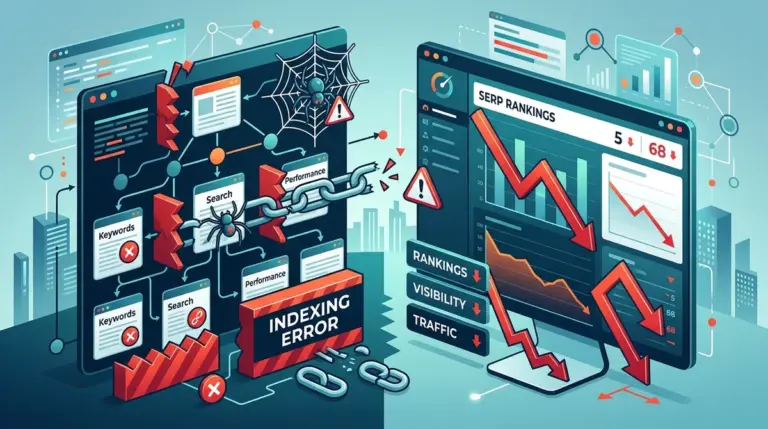
Content strategy and backlink acquisition often dominate the SEO conversation, but technical integrity is the foundation upon which those efforts sit. If a site’s technical infrastructure is compromised, search engine crawlers cannot efficiently parse, index, or value the content. The result is a persistent ceiling on keyword rankings that no amount of high-quality copywriting can break through. When a page drops from position three to page two without a clear algorithmic update or a competitor’s surge, the culprit is almost always a technical regression.
The Relationship Between Crawl Efficiency and Ranking Stability
Google does not have infinite resources to crawl every page on the internet. It assigns a crawl budget to every site based on its authority and update frequency. Technical errors like excessive redirect chains, infinite calendar loops, or unoptimized filtered navigation waste this budget on low-value URLs. When the crawler spends its time on 404 pages or low-quality parameter URLs, it fails to reach your high-value commercial pages frequently enough to notice updates or fresh content.
Impact: Delayed indexing of new content and stagnant rankings for existing pages because the "freshness" signal is never triggered.
Excessive Redirect Chains and 404 Bloat
Every time a crawler encounters a 301 redirect, a small amount of "link juice" or PageRank is lost. While a single redirect is standard, chains of three or more significantly dilute the ranking power passed to the destination URL. Furthermore, a high volume of 404 errors signals to search engines that the site is poorly maintained, which can lead to a site-wide reduction in perceived quality.
Core Web Vitals as a Competitive Tie-Breaker
Since the introduction of the Page Experience update, Core Web Vitals (CWV) have moved from "nice-to-have" metrics to active ranking signals. In competitive niches where the top five results have similar backlink profiles and content depth, technical performance becomes the tie-breaker. Specifically, Largest Contentful Paint (LCP) and Cumulative Layout Shift (CLS) directly influence how Google perceives the utility of a page.
- LCP (Largest Contentful Paint): Measures loading performance. If your hero image or main text block takes longer than 2.5 seconds to load, your ranking potential is capped.
- CLS (Cumulative Layout Shift): Measures visual stability. Pages that jump around as ads or images load provide a poor user experience, leading to higher bounce rates and lower search visibility.
- FID (First Input Delay): Measures interactivity. Slow server response times or heavy JavaScript execution can delay the page's ability to respond to user clicks.
Warning: Heavy reliance on client-side rendering (JavaScript) can lead to "partial indexing." If the Googlebot timeout occurs before your JavaScript executes, the crawler sees a blank page or missing keywords, causing an immediate and drastic drop in rankings for those specific terms.
Site Architecture and the Distribution of PageRank
Rankings are not just about the strength of an individual page; they are about how authority flows through the entire domain. A flat site architecture ensures that no page is more than three clicks away from the homepage. When technical debt leads to a deep, siloed architecture, high-value pages are starved of internal link equity.
Best for: E-commerce sites with thousands of SKUs where internal linking is the primary driver of category page rankings.
The Danger of Orphaned Pages
An orphaned page is a URL that exists on your server but is not linked to from any other page on your site. Even if these pages are included in your XML sitemap, search engines view them as less important. Without internal links to provide context and authority, orphaned pages rarely rank for competitive, high-volume keywords.
Mobile-First Indexing Discrepancies
Google now uses the mobile version of a website for indexing and ranking. A common technical failure occurs when the mobile version of a site serves less content or different metadata than the desktop version. If your "Read More" buttons hide critical keyword-rich text on mobile, or if your mobile navigation omits certain categories, your rankings will suffer because the desktop version—no matter how optimized—is no longer the primary source of truth for the index.
Canonicalization Errors and Keyword Cannibalization
When multiple pages on a site target the same keyword, or when duplicate content exists across different URL structures (like HTTP vs. HTTPS or trailing slashes), search engines struggle to decide which page should rank. Without proper rel="canonical" tags, Google may choose the "wrong" version of a page to index, or worse, split the ranking signals between two pages. This results in both pages ranking lower than a single, consolidated page would.
Technical Fix: Audit your site for self-referencing canonicals and ensure that tracking parameters (like UTM codes) do not create duplicate indexable entries that compete with your primary URLs.
Auditing Technical Health for Ranking Recovery
To fix ranking issues caused by technical problems, you must move beyond surface-level metrics. Start by analyzing your server logs to see exactly how often Googlebot is visiting your "money" pages. If the crawl frequency is low, look for "bloat" in the form of thin content or tag pages that should be set to "noindex."
Next, use a headless browser crawler to simulate how Google sees your site. This will reveal if your content is being hidden behind JavaScript or if CSS is blocking the rendering of critical elements. Finally, map your internal link structure. If your most important keywords are targeted by pages with the fewest internal links, a simple restructuring of your navigation or the addition of "related articles" sections can provide the necessary authority boost to move those keywords from page two to page one.
Frequently Asked Questions
How long does it take for rankings to improve after fixing technical SEO issues?
It depends on the crawl frequency of your site. For high-authority sites, you may see movements within days. For smaller sites, it can take 2 to 4 weeks for Google to recrawl the affected pages and update the index with the new technical configurations.
Can a slow site still rank number one?
Yes, if the content is significantly better than competitors and the backlink profile is dominant. However, in a competitive landscape, a slow site is at a severe disadvantage and will likely lose its position to a faster site with comparable content.
Do 404 errors directly penalize my whole site?
A few 404s won't trigger a penalty, but a high ratio of 404s to live pages signals poor site health. This can lead to a reduction in crawl budget, meaning your new, optimized content won't be indexed as quickly, indirectly hurting your overall ranking potential.
Is mobile-friendliness a binary ranking factor?
While it’s often discussed as a "yes/no" factor, the quality of the mobile experience—including font size, button spacing, and content parity—influences how users interact with your site. Poor mobile UX leads to negative signals that can degrade rankings over time.