Traditional SEO reporting often relies on a metric that is becoming increasingly deceptive: the numerical rank. In an era where Google’s first page is crowded with AI Overviews, Local Packs, and Featured Snippets, being "number one" no longer guarantees the top spot on a user’s screen. If your site ranks first organically but sits below a massive Featured Snippet and a row of sponsored products, your actual visibility is negligible. SERP feature tracking is the process of monitoring these non-traditional elements to understand how they influence traffic, click-through rates (CTR), and brand authority.
For agencies and in-house marketers, this data is the difference between chasing vanity metrics and capturing actual revenue. Tracking these features allows you to identify where you are being "pushed down" by Google’s own modules and where you have the opportunity to leapfrog competitors by winning a snippet or an image pack.
The Evolution of Search Result Real Estate
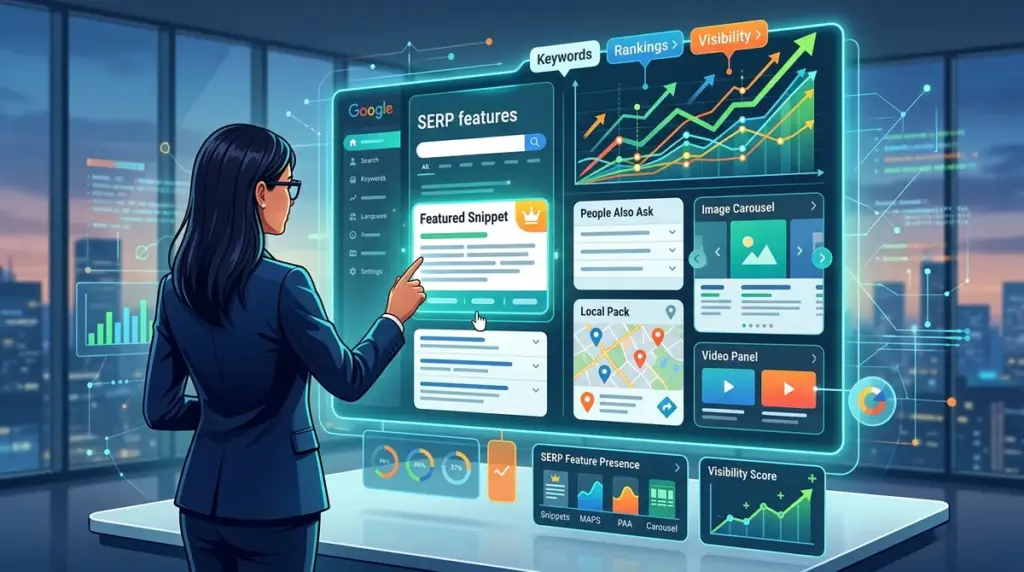
The modern search engine results page (SERP) is a modular environment. Google no longer presents a simple list of ten blue links; it provides answers, maps, and shopping carousels designed to keep users on the page or direct them to specific types of content. SERP feature tracking identifies which of these modules appear for your target keywords and whether your domain occupies them.
Best for: Digital strategists who need to justify SEO spend by showing "Share of Voice" rather than just static ranking positions.
When you track features, you aren't just looking at a number; you are looking at the layout of the digital shelf. This perspective shift is vital because different features satisfy different user intents. A "Local Pack" indicates a high-intent transactional query, while a "People Also Ask" box suggests an informational journey that requires long-form content. Without tracking these, you are optimizing in the dark.
High-Impact SERP Features to Monitor
Not all features are created equal. Some represent a massive opportunity for traffic, while others act as "zero-click" roadblocks that satisfy the user's query without them ever visiting your site. Effective tracking prioritizes the following:
- Featured Snippets: Often called "Position Zero," these provide a direct answer to a query. Tracking these allows you to see if you’ve won the snippet or if a competitor is siphoning off the most valuable traffic for a high-volume head term.
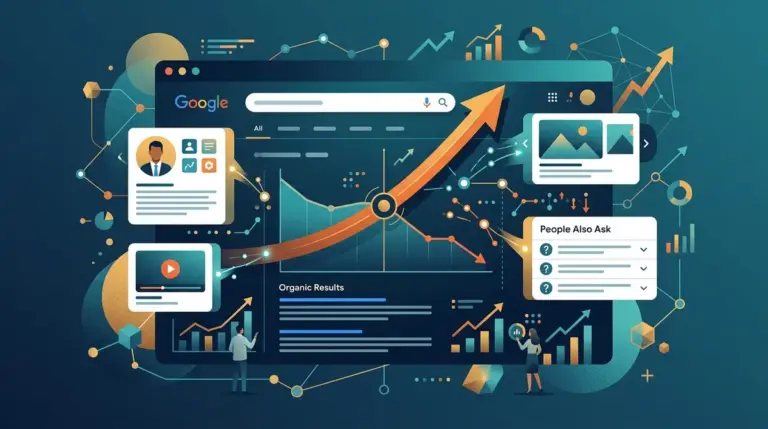
- People Also Ask (PAA): These dynamic accordions reveal the secondary questions users are asking. Tracking PAA expansion provides a direct roadmap for content updates and FAQ schema implementation.
- Local Packs: For businesses with a physical footprint, the 3-pack is the only ranking that matters. Tracking this ensures you are visible for "near me" searches, which often bypass organic results entirely.
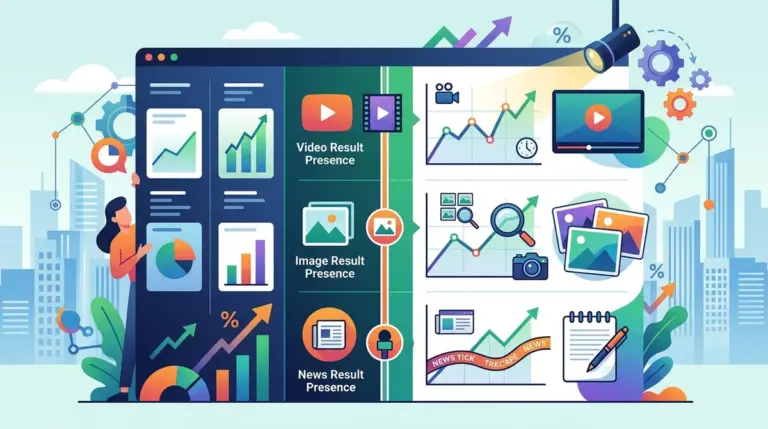
- Video and Image Carousels: Visual search is expanding. If your keywords trigger these carousels, your strategy must shift toward multimedia optimization rather than just text-based SEO.
- AI Overviews (SGE): The newest and most disruptive feature. Tracking where these appear helps you understand which queries are being automated by Google and where your organic links are being displaced.
The Economic Reality of SERP Real Estate
The primary reason to track SERP features is the preservation of Click-Through Rate (CTR). Data from various industry studies suggests that the presence of a Featured Snippet can reduce the CTR of the first organic result by as much as 10% to 15%. If you are not tracking these features, you may see your rankings remain stable while your organic traffic plateaus or declines, leading to a confusing reporting cycle.
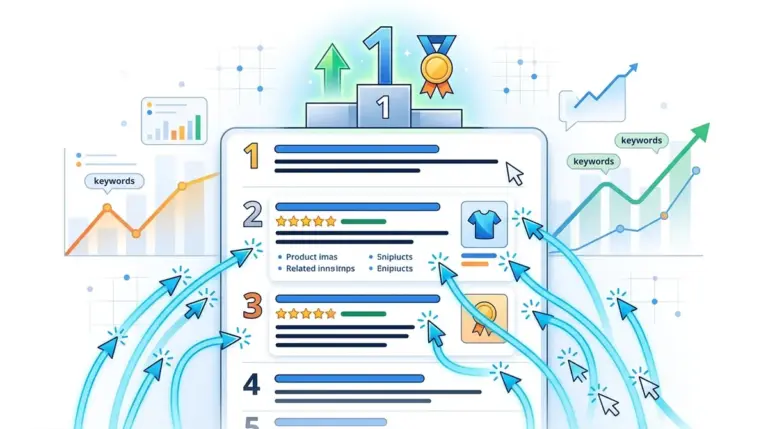
By integrating feature data into your Keyword Ranking Tracker, you can calculate a more accurate "Share of Voice." This metric weights your rankings based on their visual prominence. A rank of #3 that includes a thumbnail image and sitelinks is often more valuable than a rank of #1 that is buried under a "People Also Ask" block and three top-of-page ads.
Warning: Ignoring "Zero-Click" features can lead to wasted budget. If a keyword consistently triggers a Knowledge Panel that answers the query fully (e.g., "What time is it in London?"), no amount of SEO will drive significant traffic to your site for that term. Shift your focus to queries where the SERP features encourage a click.
Technical Implementation: How to Track Features Effectively
Effective tracking requires a tool that captures a "snapshot" of the SERP at the time of the crawl. This is not just about recording a 'yes' or 'no' for a feature's presence; it is about understanding the competitive landscape. You need to know who owns the feature if you don't. If a competitor owns the Featured Snippet for a high-value term, you can analyze their content structure—whether they use a table, a bulleted list, or a concise paragraph—and optimize your page to win it back.
Furthermore, you should track the "pixel height" of your results. This technical metric measures exactly how many pixels from the top of the screen your link appears. On mobile devices, where screen real estate is limited, a result that appears at 1,500 pixels is effectively invisible, regardless of its numerical rank. High-end tracking allows you to see the SERP exactly as the user sees it, providing a reality check for your SEO performance.
Turning SERP Feature Data into a Content Strategy
Once you have identified which features are prevalent in your niche, you can align your content production accordingly. This is where SERP feature tracking moves from a reporting task to a strategic advantage. If your data shows that 80% of your target keywords trigger a "Video Carousel," your next quarterly budget should likely prioritize YouTube or embedded video content over traditional blog posts.
Similarly, if your keywords frequently trigger "Sitelinks," you should focus on your site’s architecture and internal linking. Sitelinks increase the vertical footprint of your result, making it harder for users to scroll past you and significantly increasing the likelihood of a click. Tracking these allows you to verify that Google is interpreting your site structure correctly and displaying the most relevant sub-pages.
Optimizing for the Modern Search Layout
To stay competitive, your SEO workflow must evolve beyond the "top 10" mindset. Start by auditing your current keyword list through the lens of SERP features. Identify "low-hanging fruit" where you rank in the top three but do not yet own the Featured Snippet. These are your immediate opportunities for traffic growth. Next, identify keywords where the SERP is so cluttered with ads and Google-owned features that the organic opportunity is too low to justify the effort; these keywords should be deprioritized in favor of "cleaner" SERPs where organic results still dominate the fold.
Finally, use feature tracking to monitor "SERP volatility." Features like AI Overviews and PAA boxes change frequently. By tracking these changes, you can react to Google’s algorithm shifts in real-time, adjusting your content before a temporary dip in traffic becomes a permanent loss of market share.
Frequently Asked Questions
Does winning a Featured Snippet always increase traffic?
Not necessarily. While it increases visibility, some snippets provide a complete answer that satisfies the user's intent on the SERP, leading to a "zero-click" search. It is essential to track whether the snippet leads to a higher CTR or just higher impressions.
How often should I monitor SERP features?
For high-volume, high-competition keywords, daily tracking is recommended. Google frequently tests different SERP layouts, and a feature you "own" on Monday could be replaced or removed by Wednesday. Frequent tracking helps you identify these patterns early.
Can I track SERP features for mobile and desktop separately?
Yes, and you should. SERP layouts differ significantly between devices. For instance, Local Packs and Image Carousels often take up more relative space on mobile screens, making feature tracking even more critical for mobile-first SEO strategies.
What is the most important SERP feature for e-commerce?
For e-commerce, the "Popular Products" grid and "Image Carousels" are vital. Tracking these allows you to see if your product schema is working correctly and if your images are high-quality enough to be pulled into Google’s visual shopping modules.