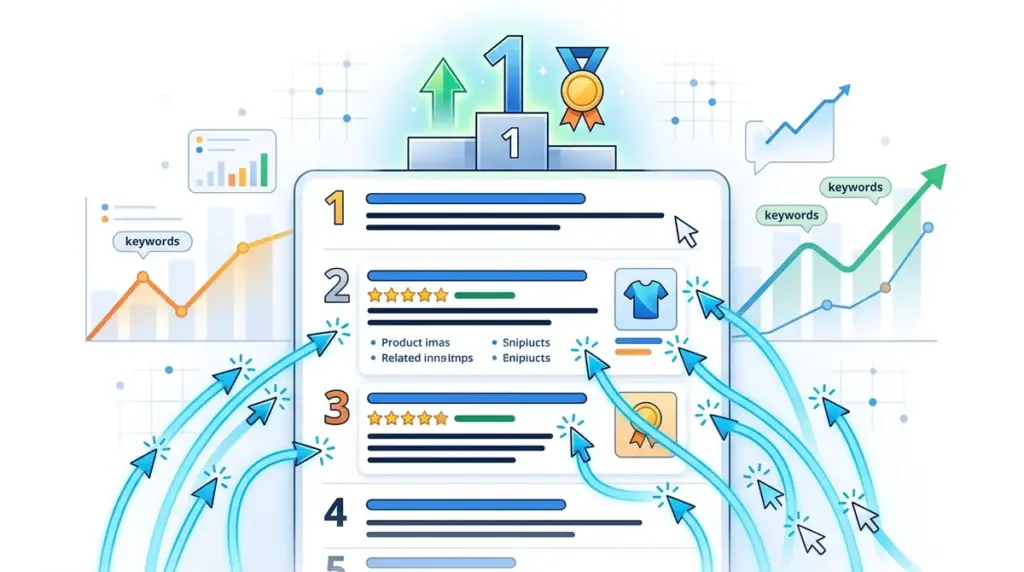
The traditional SEO success metric—holding the number one organic position—has become a deceptive KPI. In the current search landscape, ranking first for a high-volume keyword no longer guarantees a proportional flood of traffic. This disconnect occurs because Google has transitioned from a list of blue links to a multifaceted discovery engine that prioritizes immediate answers and paid placements over organic click-throughs. For agencies and site owners, obsessing over a "Number 1" badge without analyzing the actual SERP (Search Engine Results Page) layout leads to misallocated budgets and missed revenue targets. Understanding how SERP features impact click rates is key to adapting your strategy.
The Erosion of Organic Real Estate
The primary reason a top ranking fails to deliver clicks is the sheer volume of non-organic elements occupying the "above the fold" space. On mobile devices, a user may have to scroll through three or four screen lengths before reaching the first organic result. This visual displacement fundamentally alters user behavior.
The Dominance of Google Ads
For high-intent commercial keywords, Google frequently displays up to four text ads at the top of the page, often followed by a Google Shopping carousel. These elements are designed to look increasingly like organic results, capturing the "ready to buy" clicks that previously went to the top organic site. If your top-ranked page is competing against four aggressive PPC campaigns, your click-through rate (CTR) will likely hover below 10%, despite your technical ranking.
The Rise of Local Packs and Map Pins
For any query with even a hint of local intent (e.g., "best coffee roasters" or "SEO agency London"), the Local Pack occupies the most valuable real estate. Users are conditioned to click the map or the top three local listings. Even if you rank first organically below this block, you are effectively in fourth or fifth place in terms of visual hierarchy.
The Zero-Click Search Phenomenon
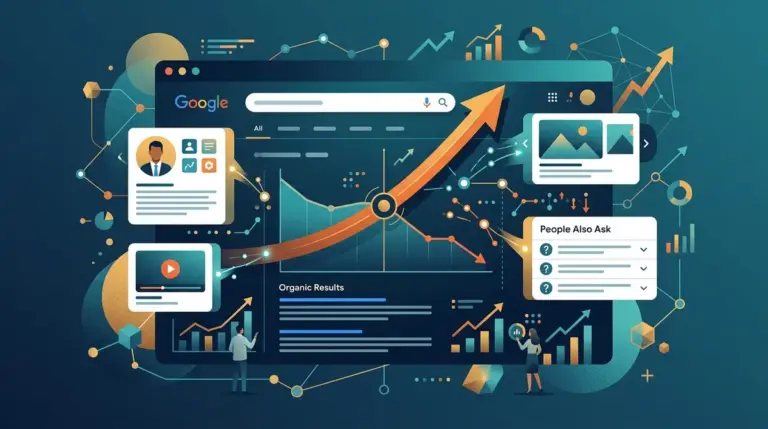
Google’s goal is to satisfy user intent as quickly as possible, often without requiring a visit to a third-party website. This has birthed the "zero-click search," where the user finds their answer directly on the SERP. Featured Snippets, Knowledge Panels, and "People Also Ask" (PAA) boxes serve this purpose.
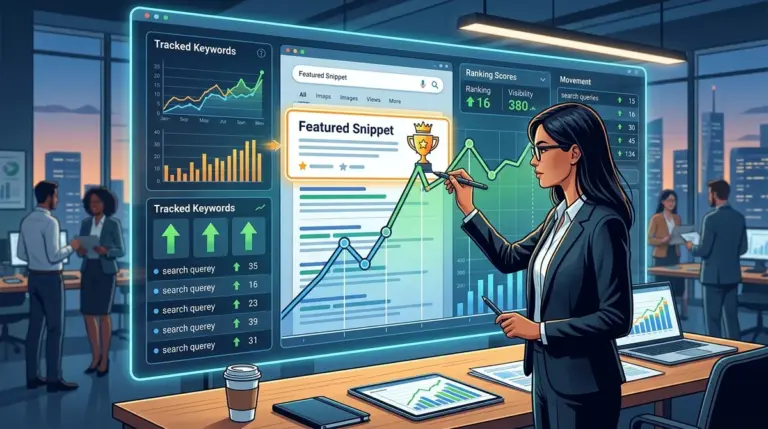
Featured Snippet Cannibalization: When you earn a Featured Snippet (Position Zero), you may see a spike in impressions but a stagnation or drop in clicks. If the snippet provides the full answer—such as a specific date, a short definition, or a simple calculation—the user has no incentive to click through to your site. You have provided the value, but Google has captured the engagement.
Warning: Mobile SERPs are significantly more prone to zero-click behavior. A desktop user might click a result to read more, but a mobile user looking for a quick fact will almost always exit the search after viewing the Featured Snippet or Knowledge Panel.
Search Intent Mismatch and "Vanity" Rankings
Not all number one rankings are created equal. A page might rank first for a high-volume term that lacks commercial or specific informational depth. If the content on the page does not perfectly align with what the user is looking for at that exact moment, they will bounce back to the SERP or ignore the result entirely.
- Informational vs. Transactional: Ranking #1 for "how to fix a pipe" with a product page will result in low CTR. Users want a guide, not a checkout button.
- Navigational Intent: If users search for a specific brand name and you rank #1 for a tangential term, they will ignore you to find the official brand login or homepage.
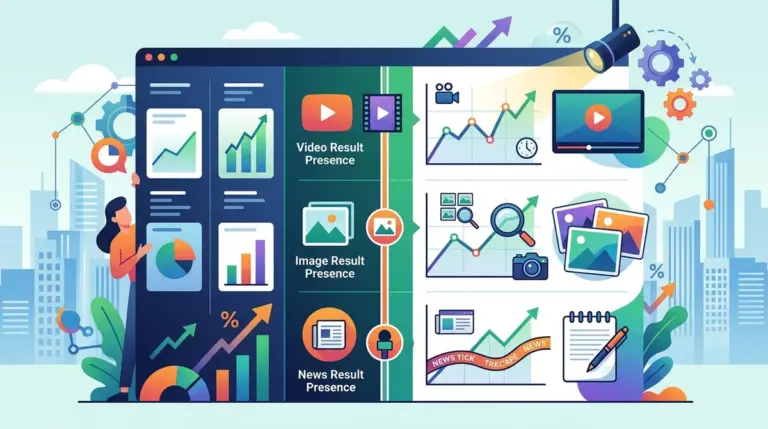
- Ambiguous Queries: Keywords with multiple meanings often have "fragmented" SERPs. Google might show a mix of news, images, and videos, diluting the click share for the top organic text result.
The Impact of Poor Snippet Optimization
Even if you occupy the top spot and the SERP is relatively clean, your "packaging" dictates the click. A number one ranking with a poorly written title tag or a generic meta description will lose out to a number two or three ranking that uses compelling, benefit-driven copy.
Google frequently rewrites meta descriptions if it deems the provided text irrelevant to the specific query. If your automated SEO plugin is generating dry, repetitive descriptions, you are essentially invisible to the user’s eye. Furthermore, the absence of Schema Markup (such as Review Stars, FAQ dropdowns, or Price tags) makes your result look flat compared to competitors who use rich snippets to occupy more vertical space and build immediate trust.
Diagnostic Checklist for Low-CTR Rankings
If you see a keyword ranking in the top three positions but the traffic data in Search Console is underwhelming, evaluate the following factors:
- Pixel Depth: Use a tool to measure how many pixels down the page your organic result actually sits. If it is below 1,000 pixels, you are invisible on most laptops.
- SERP Feature Density: Count the number of Ads, PAA boxes, and Image carousels. If there are more than three, the keyword may not be worth the optimization effort.
- Title Tag Relevance: Does your title address the specific "pain point" of the query, or is it just a string of keywords?
- Site Speed and Core Web Vitals: If your site is slow, users may click the result, see a blank screen for two seconds, and bounce back to the SERP before the visit is even registered as a "click" in some analytics setups.
Aligning Tracking Metrics with Actual Business Value
To move beyond the vanity of the number one spot, SEO professionals must shift their focus to "Share of Search" and "Actual Traffic Value." This involves analyzing the SERP environment before deciding which keywords to target. A number four ranking on a clean SERP with no ads or snippets is often more valuable than a number one ranking on a page crowded with Google’s own features. This involves understanding what SERP feature tracking means and prioritizing valuable placements.
Start by segmenting your keywords by SERP layout. Prioritize those where the organic results are still the primary focus of the page. For keywords where Google dominates the real estate, focus on "SERP SEO"—optimizing for the Featured Snippet or PAA boxes—to maintain brand visibility, even if the direct click-through rate is lower. Success is no longer about the rank; it is about the visibility and the subsequent action the user takes.
Frequently Asked Questions
Why is my CTR lower than the industry average for a #1 ranking?
Industry averages (often cited around 30% for position one) are aggregate data. Your specific keyword may be suppressed by heavy Google Ads presence, a Featured Snippet that answers the query instantly, or a Local Pack that diverts users to maps. Additionally, if your title tag is not enticing, users will skip to a more relevant-looking result.
Can a Featured Snippet hurt my traffic?
Yes. This is known as a "zero-click" result. While the snippet gives you high visibility and authority, it can satisfy the user's curiosity immediately, meaning they have no reason to visit your website. This is particularly common for factual queries like "What is the capital of France?" or "Current exchange rate."
Should I stop targeting keywords with high ad density?
Not necessarily, but you should adjust your expectations. High ad density usually indicates high commercial value. While you will get fewer organic clicks, the clicks you do get are likely to be high-converting. Treat these keywords as long-term brand plays rather than immediate traffic drivers.
How do I improve my CTR without changing my rank?
Focus on rich results. Implement Schema Markup (FAQ, How-to, Review) to take up more physical space on the page. Rewrite your title tags to be more "click-worthy" by including power words or specific benefits, and ensure your meta descriptions act as a compelling "ad" for the content on the page.