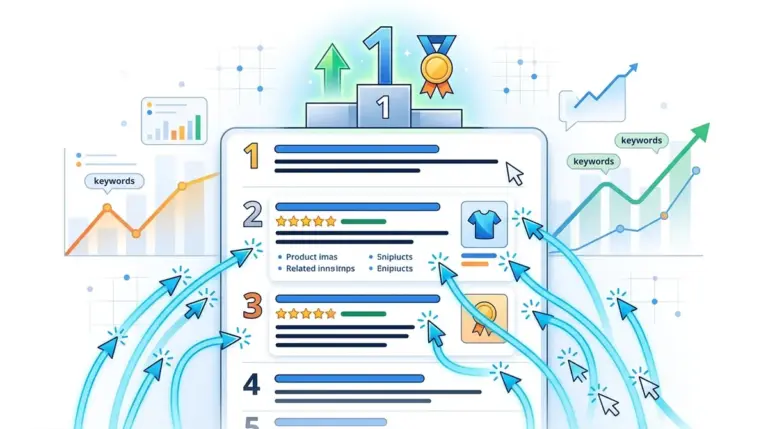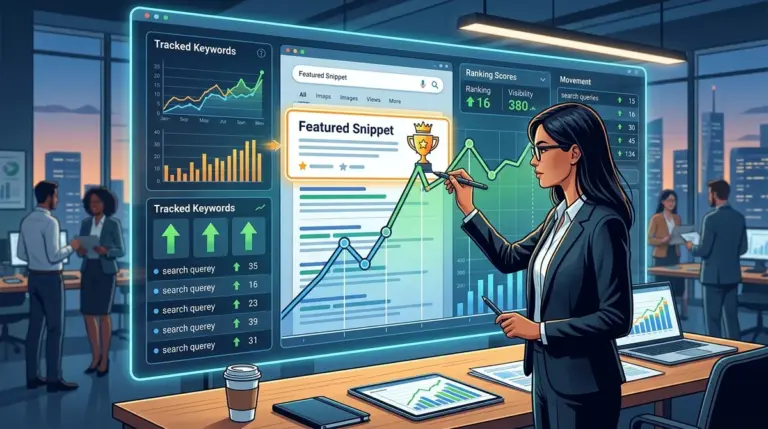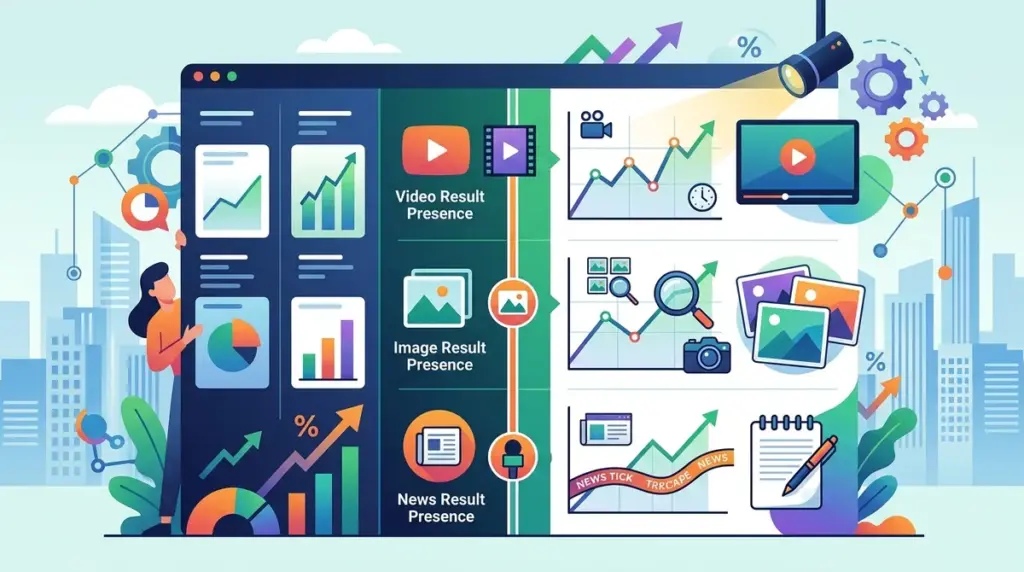
Standard rank tracking is a legacy metric that no longer reflects the reality of modern search engine result pages (SERPs). When a "Top Stories" carousel, a three-wide Image Pack, or a Video block occupies the top 600 pixels of a mobile screen, a traditional organic position of #1 is effectively pushed below the fold. To maintain visibility, SEO professionals must shift from tracking numerical lists to monitoring SERP feature presence. This requires a granular approach to data collection that identifies not just where you rank, but which rich features are cannibalizing your traffic or providing new entry points.
The Mechanics of Tracking Video Carousels
Video results typically appear in two formats: the dedicated Video tab and the Universal Search Video Carousel. Tracking the latter is critical because it often appears for "how-to" queries and high-intent product searches. Unlike standard links, video results are pulled primarily from YouTube, though Google increasingly indexes hosted video content from platforms like Wistia or Vimeo if the Keyword Ranking Tracker VideoObject markup is correctly implemented.
Best for: Educational content, product demonstrations, and high-engagement brand awareness campaigns.
To track these effectively, your ranking software must distinguish between a "Video Feature" (the presence of a video block on the page) and a "Video Rank" (your specific video occupying one of those slots). Effective tracking involves filtering your keyword sets to show only those where a Video Carousel is present. If you see a high volume of keywords with video features where you do not own a slot, it indicates a content gap that traditional blogging cannot bridge.
Optimizing for the Featured Video Slot
The "Featured Video" is the large, single-player result that often appears at the very top of the SERP. Tracking this requires monitoring "Position 0" specifically for video assets. If your software reports a standard organic rank but misses the fact that a competitor's video is occupying the top 40% of the screen, your reporting is incomplete. You need to verify if the video includes "Key Moments"—the timestamped segments Google extracts—as these significantly increase the vertical footprint of the result.
Monitoring Image Pack and Visual Search Real Estate
For e-commerce and lifestyle publishers, the Image Pack is often the primary driver of top-of-funnel discovery. Google's transition toward "Multisearch" and more visual SERPs means that an Image Pack can appear at the top, middle, or bottom of the page. Tracking these requires a tool that records the "Pixel Depth" of the feature. An Image Pack at 200 pixels down is a major threat; one at 3000 pixels down is a minor distraction.
- Thumbnail Attribution: Ensure your tracking identifies if the image displayed in the pack links directly to your domain or a third-party aggregator like Pinterest.
- Commercial Intent: Monitor for the "Product" badge within image results, which indicates that Google has associated the image with a Merchant Center feed or Schema markup.
- SERP Layout Shifts: Track how often Image Packs appear for your core "buying" keywords, as this should dictate whether you invest in high-res photography or traditional long-form copy.
Pro Tip: Do not treat Image Pack presence as a static win. Google frequently tests the placement of these packs based on user click-through rates. If your tracking shows an Image Pack frequently jumping from the bottom to the top of the SERP, it is a signal that the intent for that keyword is shifting from informational to navigational or commercial.
Tracking Top Stories and News Results
News tracking is distinct because of its volatility. The "Top Stories" carousel is refreshed in near real-time, often multiple times per hour. If you are a publisher, tracking "daily" ranks is useless. You require high-frequency tracking—ideally every 15 to 30 minutes—to understand your share of voice during a news cycle.
Best for: Digital PR, trending topics, and high-authority news publishers.
When tracking news, you must differentiate between the standard organic results and the "Top Stories" box. A successful news strategy involves appearing in the first three slots of the carousel. Tracking software should alert you when a "Top Stories" box triggers for a keyword that previously only showed standard links, as this indicates a "trending" status that requires immediate content updates or social amplification.
The Role of AMP and Web Stories
While Google has moved away from the mandatory AMP requirement for Top Stories, tracking whether your result appears as a standard mobile page or a "Web Story" is vital. Web Stories occupy a unique visual space and are often tracked as a separate SERP feature. If your competitors are dominating the Top Stories box with Web Story formats, your standard article format is at a competitive disadvantage regardless of its editorial quality.
Integrating Feature Presence into Share of Voice (SoV)
A sophisticated SEO strategy uses a weighted Share of Voice model. In this model, a #1 organic rank is worth less if a Video Carousel and a News box sit above it. Your tracking dashboard should provide a "Visibility Index" that adjusts based on the presence of these features. For example, if a keyword has a News box, the total available "organic" visibility might be reduced by 30%, and your SoV should reflect your share of that remaining 70%—unless you are in the News box itself.
To implement this, tag your keywords by the features they trigger. Create segments for "Video-heavy," "Image-heavy," and "News-triggering" keywords. This allows you to report to stakeholders that while organic positions might be stable, "Visual Visibility" is increasing due to better image optimization or video production.
Implementing a Multi-Feature Tracking Workflow
To move from theoretical tracking to practical execution, follow this workflow to ensure no rich result presence goes unmonitored:
First, audit your existing keyword list to identify which terms currently trigger rich features. Most enterprise-grade trackers allow you to filter by "SERP Features Present." Second, cross-reference this list with your own site's "Owned Features." This gap analysis reveals where you are ranking organically but failing to capture the rich feature. Third, set up automated alerts for "Feature Volatility." If a "Top Stories" box disappears from a high-traffic head term, it signals a shift in how Google perceives the intent of that query, requiring an immediate pivot in content strategy.
Finally, use "Pixel Tracking" where available. Knowing that your image result is 450 pixels from the top of the screen provides a much more accurate prediction of traffic than simply knowing it is in the "Image Pack." This data allows for more precise forecasting and better alignment with paid search teams who may be bidding on the same visual real estate.
Frequently Asked Questions
How often should I track News results compared to Video results?
News results require high-frequency tracking, often hourly, due to the rapid turnover of the "Top Stories" carousel. Video and Image results are more stable and can typically be tracked on a daily basis, as these features are tied to more persistent index signals rather than real-time trending data.
Does owning an Image Pack result help my organic ranking?
There is no direct "ranking boost" for your organic link, but owning the Image Pack significantly increases your total SERP real estate. This improves brand familiarity and can lead to higher click-through rates on your organic link if both are visible simultaneously.
Why does my tracker show me at #1 when a video is above me?
Traditional trackers often count "blue links" separately from SERP features. To get an accurate view, you must use a tracker that offers "Absolute Ranking" or "True Rank," which counts every element on the page (ads, videos, news, images) in sequential order from the top down.
Can I track features that only appear on mobile?
Yes. Google’s mobile SERP is significantly more visual than desktop. It is essential to track mobile and desktop rankings separately, as Video Carousels and "Short Videos" (TikTok/Shorts style) are far more prevalent on mobile devices.