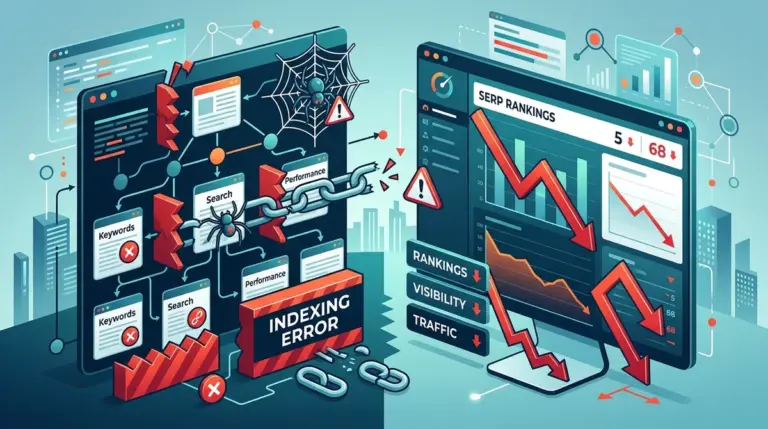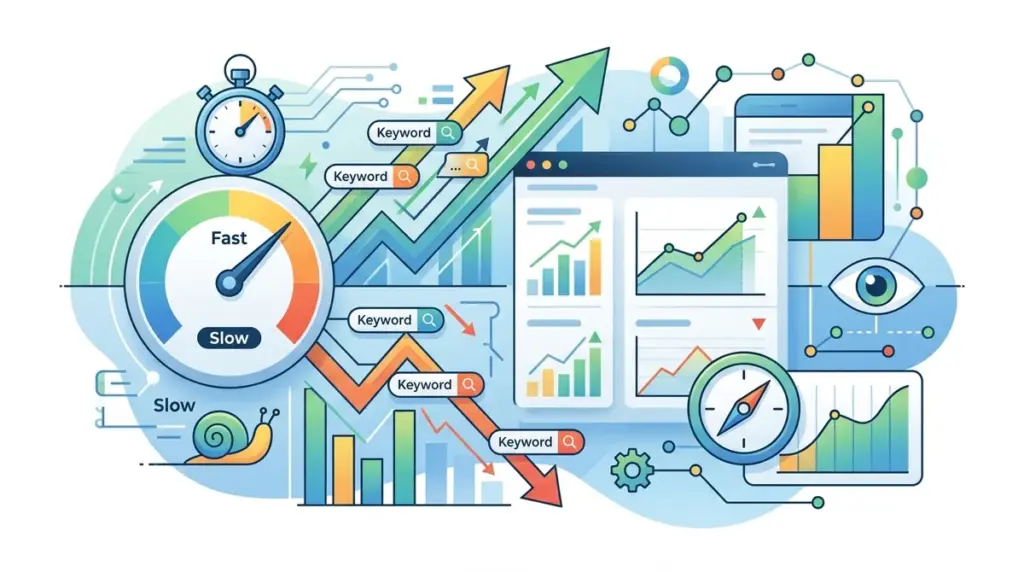
SEO professionals often treat page speed as a developer’s concern, but for those managing keyword rankings, it is a primary lever for visibility. Since the 2021 Page Experience update, Google has moved beyond using speed as a mere tie-breaker between two identical pages. It is now a foundational requirement for maintaining top-tier positions in high-competition SERPs. When a site’s performance degrades, ranking volatility follows, often manifesting as a slow drift from the top three spots into the lower half of page one.
The Mechanics of the Page Experience Signal
Google evaluates speed through Core Web Vitals (CWV), a set of specific metrics that measure load performance, interactivity, and visual stability. These are not abstract scores; they are field data points collected from actual Chrome users. If your Largest Contentful Paint (LCP) exceeds 2.5 seconds, or your Cumulative Layout Shift (CLS) is higher than 0.1, your URL is flagged as "Needs Improvement" or "Poor."
Impact on Rankings: While a fast site won't automatically catapult a low-quality page to the top, a slow site will actively suppress high-quality content. In a competitive niche where the top five results all have high authority and optimized on-page content, Google uses CWV as the deciding factor. Failing these metrics results in a ranking "ceiling" that prevents your content from reaching its full traffic potential.
Indirect Ranking Factors: Dwell Time and Bounce Rate
Beyond the direct algorithmic weight of CWV, page speed influences keyword positioning through user behavior signals. Search engines monitor how users interact with a result after clicking. If a page takes four seconds to load, the probability of a bounce increases by 90%. When a user clicks a result and immediately hits the "back" button because the page is unresponsive, it sends a signal to Google that the result did not satisfy the user's intent.
This "pogo-sticking" behavior is a leading cause of ranking decay. Even if your technical SEO is perfect, poor load times lead to lower dwell times. Over time, Google’s RankBrain and other machine learning components interpret these signals as a lack of relevance or utility, leading to a steady decline in keyword positioning for that specific URL.
The Critical Role of Interaction to Next Paint (INP)
As of March 2024, Interaction to Next Paint (INP) replaced First Input Delay (FID) as a core metric. This change is significant for commercial sites with heavy interactivity, such as filtering systems or complex checkout flows. INP measures the overall responsiveness of a page throughout its entire lifecycle, not just the first interaction. If a user clicks a "Sort by Price" button and the UI freezes for 500ms, the INP score suffers. High INP scores correlate with lower conversion rates and, eventually, lower rankings as users abandon the frustrated experience.
How Latency Erodes Your Crawl Budget
For large-scale publishers and e-commerce sites, page speed directly dictates how effectively Googlebot crawls the site. Search engines allocate a "crawl budget" to every domain—a limit on how many pages the bot will crawl in a given timeframe. This budget is heavily influenced by server response time (Time to First Byte or TTFB).
- Reduced Indexing Frequency: If your server is slow, Googlebot can only process a fraction of your pages before moving on. This means updates to your content or new product launches take longer to be indexed and ranked.
- Stale Content: When the crawl budget is exhausted on slow-loading legacy pages, your high-value ranking pages may not be refreshed in the index, causing them to lose relevance against faster competitors who update their data frequently.
- Discovery Issues: Slow sites often suffer from "discovered - currently not indexed" errors because the bot determines the resource cost of rendering the page is too high relative to its perceived value.
Warning: Aggressive server-side caching can mask underlying database latency, leading to "ghost" performance scores that look good in synthetic tests but fail in real-world scenarios where users trigger uncached dynamic requests.
Correlating Speed Improvements with Rank Recovery
When a site undergoes a performance sprint—optimizing images, minifying JavaScript, and implementing a robust Content Delivery Network (CDN)—the impact on keyword positioning is rarely instantaneous. Typically, there is a lag of two to four weeks as Google re-crawls the affected URLs and updates its field data via the Chrome User Experience Report (CrUX).
Best for: Agencies looking to prove ROI should track CWV metrics alongside daily keyword fluctuations. When LCP drops from 3.0s to 1.8s, you will often see a corresponding stabilization in "striking distance" keywords (those ranked 4-10) as the page experience penalty is lifted.
Immediate Steps for Speed-Driven Visibility Gains
To prevent page speed from cannibalizing your keyword rankings, focus on high-impact technical fixes that move the needle for both users and bots. Avoid chasing a perfect 100/100 Lighthouse score at the expense of functionality, but ensure you meet the "Good" threshold for all Core Web Vitals.
- Image Compression and Modern Formats: Replace JPEGs with WebP or AVIF. Large hero images are the primary cause of LCP failures.
- Prioritize Critical CSS: Deliver the styling needed for above-the-fold content immediately and defer the rest. This reduces the time users spend staring at a blank screen.
- Third-Party Script Audit: Every tracking pixel, heat map, and chat widget adds latency. Remove unused scripts and use "async" or "defer" attributes for those that remain.
- Server-Level Upgrades: Move to HTTP/3 and ensure your hosting provider utilizes NVMe storage to minimize TTFB.
Strategic Monitoring of Performance and Positioning
The relationship between speed and rankings is dynamic. A site that is fast today can become slow tomorrow due to a bloated plugin update or an unoptimized marketing campaign. Maintaining top keyword positions requires a dual-track monitoring strategy: tracking the technical health of the URL and the movement of the keyword simultaneously. If you notice a sudden drop in rankings across a specific category, the first place to look is the Page Experience report in Google Search Console. If the drop aligns with a spike in LCP or CLS, you have identified a technical performance issue rather than a content relevance problem. Addressing these technical regressions is often the fastest way to reclaim lost organic real estate.
Frequently Asked Questions
Does a 100/100 PageSpeed Insights score guarantee better rankings?
No. The score is a lab metric. Google uses field data (real user experiences) for ranking. A score of 90+ is generally sufficient; beyond that, the ranking benefits diminish compared to the effort required, and content quality remains the primary driver.
Can a slow site still rank #1?
Yes, if the content is uniquely valuable and has significantly more authority than competitors. However, a slow site is vulnerable. If a competitor matches your content quality and authority but offers a faster experience, they will likely overtake you.
How often does Google update its speed data for my site?
Google uses a 28-day rolling average for Core Web Vitals data. This means that after you fix a speed issue, it will take nearly a month for the full impact to be reflected in your Search Console reports and ranking calculations.
Does mobile speed affect desktop rankings?
Since Google moved to mobile-first indexing, the mobile version of your site is the primary version used for indexing and ranking. Therefore, poor mobile performance can negatively impact your rankings on both mobile and desktop search results.